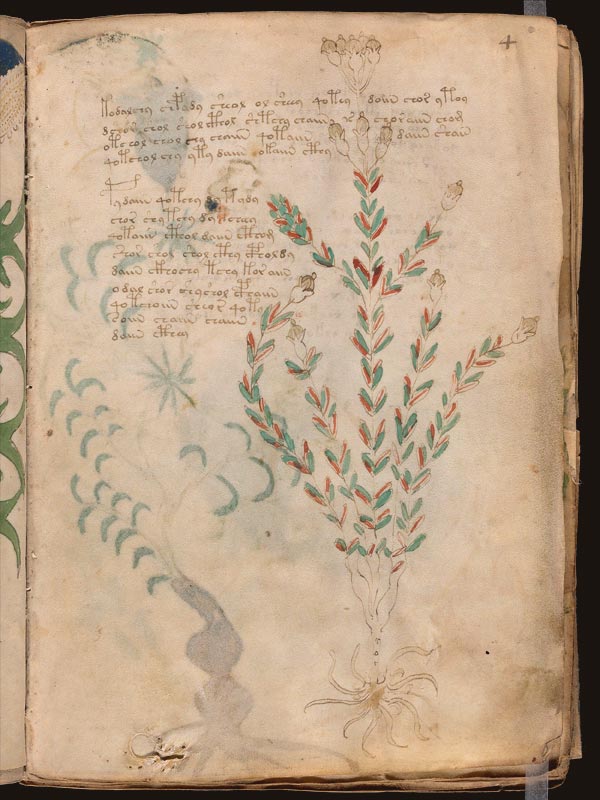
Thyme (Thymus vulgaris) (f4r)
A very useful plant is thyme, both for medicine and notable for its value in many preparations. It should not be administered suddenly or in excess, but rather its liquor or decoction should be taken well crushed and in moderate quantity each day. For greater efficacy its juice is boiled and a strong decoction prepared, which benefits the chest, the breathing, and the blood. It possesses the virtue of strengthening and cleansing without corrupting the humors; it opens the passages of the chest and aids the liver, while likewise diminishing pains of the belly and intestinal gripings.
The flowers of thyme are of great efficacy against afflictions of the breath and cough; crushed, boiled, or placed in infusion, they increase in medicinal strength. It is also beneficial against reflux and certain nervous ailments, and is commonly prepared with honey so as to soften its operation and render it more suitable for the chest and throat. Taken raw, it cuts phlegm and relieves chronic cough.
Mixed with pepper and salt, it is held to be a wholesome remedy for the breathing and for strengthening the body. Physicians likewise say that this plant purifies and orders the blood, working gently against winds and inward discomforts, for which reason it is counted among the most useful and warming herbs for cold and moist diseases.
[Complete translation]
The plant illustrations in this manuscript do not necessarily represent the exact morphology of the identified species, but rather highlight the parts of medicinal interest and their therapeutic uses. The shapes and arrangements are stylized conventions typical of medieval manuscript tradition.
The translation presented here, with the scope indicated on the homepage, is a derivative work protected by copyright. If you use this material, you must cite the translator (Enrique Menéndez Crespo, 2025) and the original source: https://www.voynichdoc.com