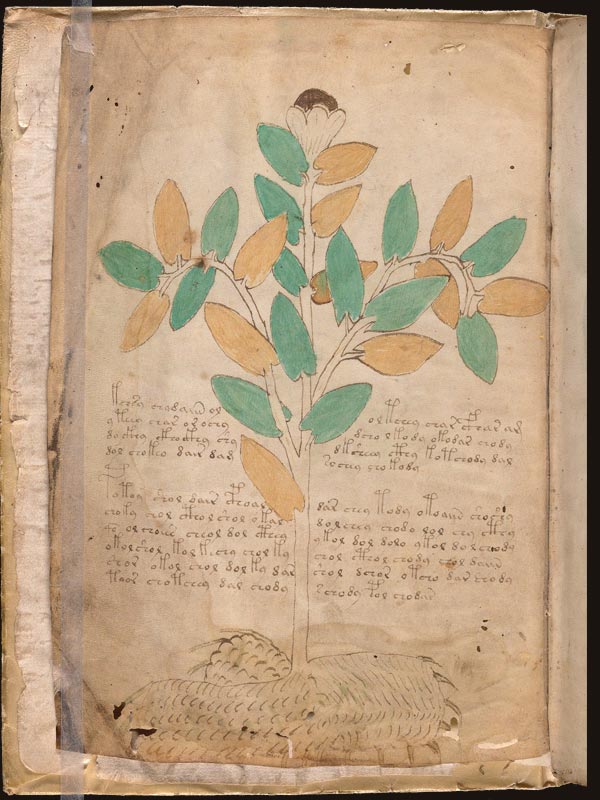
Mullein (Verbascum thapsus) (f1v)
The plant, penetrating and possessing fine leaves, known as mullein, is not considered effective for mild colds, although it relieves pain through its astringent virtue, extending its effect throughout the body. If its taste proves irritating, it should be used with moderation and prudence. The leaf is useful for chronic sufferers afflicted with itching and, once crushed, benefits hardened tissues and bark-like growths, also facilitating external application. When boiled, it is used against headaches and phlegm, and when applied directly it strengthens its therapeutic effect; its decoction soothes discomfort and softens the bowels.
The flower is administered for medicinal purposes but should not be applied to the throat without prior preparation; used together with the leaf, it reinforces its action, though it is not recommended for uterine conditions or matters related to menstruation. The pulp of the stem, prepared as a poultice, is beneficial for swellings or superficial tumors, leaves no residue, and may be cooked with juices or extracts to improve its application. This remedy helps reduce the thickness of the blood, an effect also supported by the seeds, which promote the action of the preparation, hinder the spread of poison, and act against obstructed veins; the leaves, in turn, aid the healing of lesions.
It should not be applied to bones nor used in cases of severe fatigue, but only where it can properly adhere. The seeds, being of an oily nature, are not applied to certain parts nor in excessively moist conditions. Applied to the throat, the plant calms coughs, and the flower is used against ailments of the chest and disorders of the throat. When its taste or aroma is perceived as too strong, the plant should be administered with caution and only for localized conditions.
[Complete Translation]
The plant illustrations in this manuscript do not necessarily represent the exact morphology of the identified species, but rather highlight the parts of medicinal interest and their therapeutic uses. The shapes and arrangements are stylized conventions typical of medieval manuscript tradition.
The translation presented here, with the scope indicated on the homepage, is a derivative work protected by copyright. If you use this material, you must cite the translator (Enrique Menéndez Crespo, 2025) and the original source: https://www.voynichdoc.com