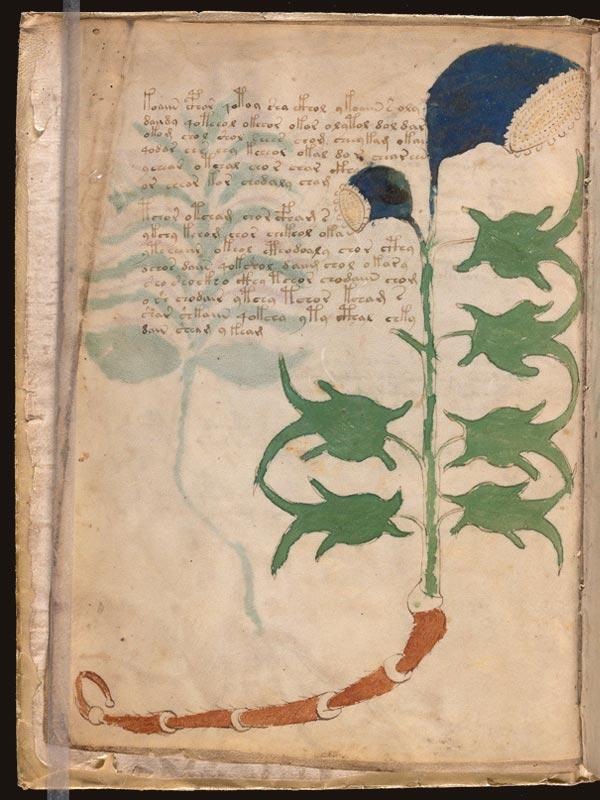
Delphinium (f3v)
The flower of Delphinium is held to be medicinal, of an astringent and moderately soothing virtue, and is likewise employed in dyeing for the liveliness of its colour. It is of use against itching when prepared in proper manner; for this purpose the flower is taken together with the juice expressed from its leaves, care being taken that it be not overmuch boiled, lest its strength be diminished. The leaves, well spread and bruised, are laid upon sores or wounds, secured with a bandage and given gentle warmth that they may work with greater efficacy. Gum well ground is often added, whereby the plaster is strengthened and made firm before being applied to the afflicted part.
Applied to the side, this remedy easeth pain, and being firmly bound it profiteth also in cough attended with mild discomfort. The colouring substance is wrapped in cloth in order to draw forth its juice, of which a sufficient portion is taken, bruised, and laid upon the part that grieveth. If there be a fissure or slight crack, it is mixed with the root and with a small measure of other fitting ingredients, then left to macerate and gently boiled. The substance thus prepared is thickened over the fire until it becomes a firm mass, from which compact portions are formed; these, being wrapped and bound upon the seat of pain, bring relief, the binding being strengthened with the root for greater firmness and benefit.
[Complete Translation]
The plant illustrations in this manuscript do not necessarily represent the exact morphology of the identified species, but rather highlight the parts of medicinal interest and their therapeutic uses. The shapes and arrangements are stylized conventions typical of medieval manuscript tradition.
The translation presented here, with the scope indicated on the homepage, is a derivative work protected by copyright. If you use this material, you must cite the translator (Enrique Menéndez Crespo, 2025) and the original source: https://www.voynichdoc.com