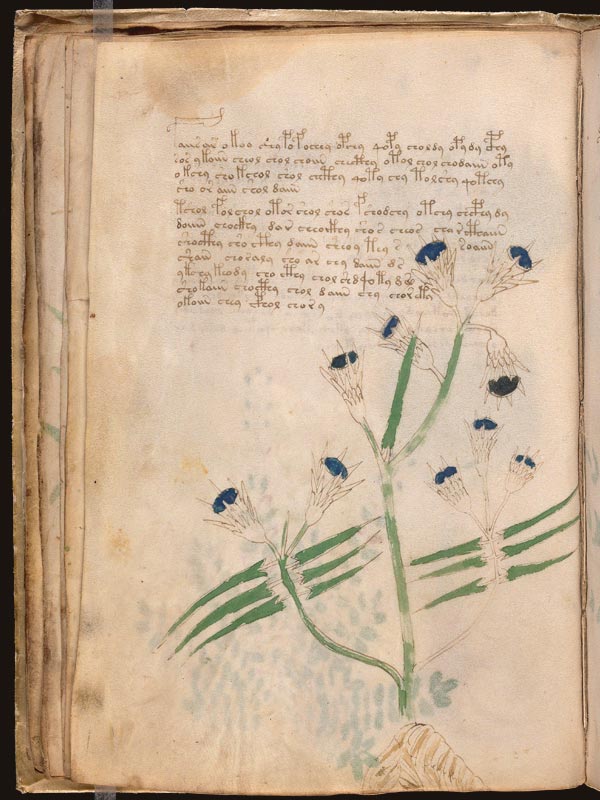
Blue Cornflower (Centaurea cyanus)(f20v)
The ointment against pain is prepared by crushing the plant and mixing it with oil. The leaf of the centaurea is regarded as a medicinal herb of great virtue for relieving pain. This remedy is compounded and prepared with myrrh, and the fresh leaves, once well crushed, are applied upon the head as a medicine. After being cut and prepared, they are soaked and bound to the afflicted place, being warmed with resin so as to increase their efficacy. The root is pressed and mixed, kneaded together with emollient substances so that it may better adhere to wounds and sores. The whole plant serves as a cleansing application for irritated wounds and afflictions of the skin. When the pain is severe, the root is boiled and left to steep. Mixed with honey, the preparation is spread upon the body and covered with bandages.
For boils and painful swellings, the remedy is mixed and applied so as to cover the diseased part. The flowers are prepared with oil, for they soothe and lessen pain. It is likewise employed in medicinal washings and soakings. In cases of corruption or putrefaction of the flesh, it helps restrain the decay and heal the tissues. The medicine may be administered through the throat and likewise through the nose and mouth. Inflammations are treated by means of poultices and bindings. The mixture is prepared as a cataplasm for ulcers, softened properly before application. It also serves to cleanse pus when the sore opens and drains. The remedy is kneaded with honey and spread as an ointment, being beneficial for wounds of the mouth. The sediment of the preparation is rubbed upon the body in the manner of a salve, and the vegetal part is once again mixed with honey for application. It possesses virtue against various ailments, though it is not a suitable remedy for diseases of the nose. It is also used for inflammations and fleshy growths of the eyes, being prepared warm before use. The leaves intended for ailments of the head are boiled and pressed, and the remedy is applied in moderate quantity according as required.
[Complete translation]
The plant illustrations in this manuscript do not necessarily represent the exact morphology of the identified species, but rather highlight the parts of medicinal interest and their therapeutic uses. The shapes and arrangements are stylized conventions typical of medieval manuscript tradition.
The translation presented here, with the scope indicated on the homepage, is a derivative work protected by copyright. If you use this material, you must cite the translator (Enrique Menéndez Crespo, 2025) and the original source: https://www.voynichdoc.com